
As with most boys’ trips, this one did not begin with excitement. It began with endless discussions, disagreements, changing plans, and debates that seemed to have no conclusion. Yet somehow, every boys’ trip eventually finds its way onto the road, and once the car starts moving, nobody really knows where the journey will take them.
The original plan was simple. Amar, Ravi, and Shivam would drive from Indore to Gwalior, where Archit would join them. The four of them would then continue towards Delhi, where I would become the fifth passenger, before we all headed to Rampur Bushahr and ultimately Chitkul, a small Himalayan village we had chosen as our destination for a few days of rejuvenation.
However, every journey comes with its own twists. There is rarely happiness without a little chaos, and this trip was no different. Somewhere between planning and execution, Ravi decided to leave the trip midway. Archit chose to stay back in Gwalior with him, leaving only Amar and Shivam to continue the long drive towards Delhi.
By the time they reached my home in Noida, it was already 2:30 in the morning. After a few hours of much-needed rest, the alarms rang again.
At 6:30 AM, the three of us finally began the journey we had been discussing for weeks. The destination was Chitkul, but before that lay hundreds of kilometres of highways, mountains, conversations, laughter, and memories waiting to be created.
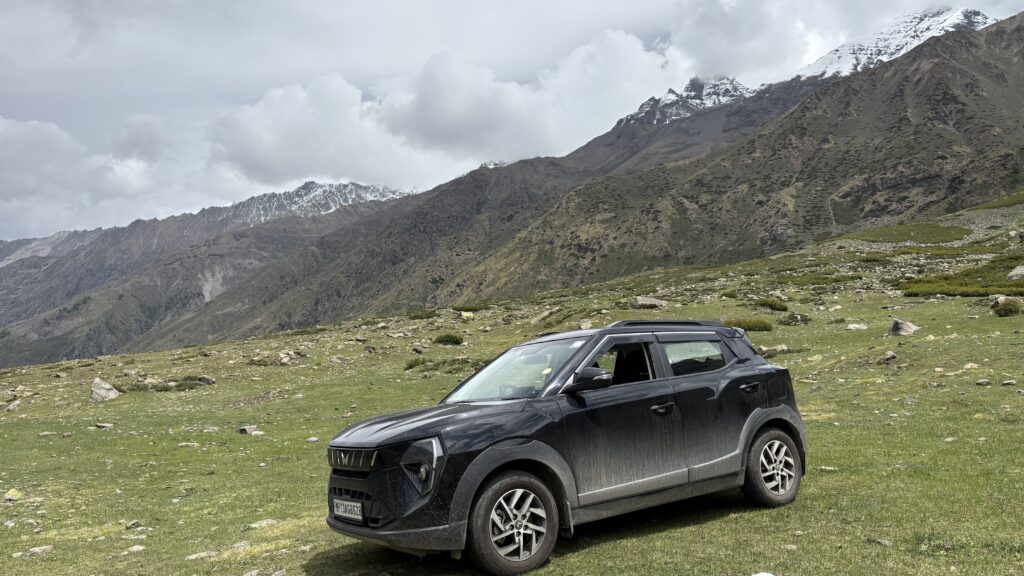
Our Mahindra XUV300 Diesel Automatic had started its journey in Indore, and many hours later it was still humming comfortably along the roads leading to Murthal, our first stop of the journey.
Like countless road trippers before us, we found ourselves pulling into the legendary Amrik Sukhdev, a place that has become almost a ritual for travellers heading north from Delhi.
Amar and Shivam have always believed that every good day begins with a good breakfast. Being doctors, they often spoke about health, discipline, and balanced living, but they also knew that some traditions are too good to ignore. A road trip to the mountains without a hearty breakfast at Murthal simply felt incomplete.
After finishing our cups of hot Indian tea and the legendary Murthal parathas, we were finally ready for what lay ahead — hundreds of kilometres of road and countless conversations.
The 1.5-litre turbo diesel engine came alive once again, and the Mahindra XUV300 pointed itself towards Rampur Bushahr, still more than 400 kilometres away. The destination was distant, but nobody in the car seemed to be in a hurry. Some journeys are remembered for the places they take you to; others are remembered for the people travelling alongside you. This one, as we would soon discover, was going to be a little bit of both.
Amar and I have known each other for what feels like ages — well over a decade. He is one of the closest friends I have. A doctor by profession, he spends most of his days attending to patients and carrying the responsibilities that come with the profession. Yet every now and then, he takes a break from the hospital corridors and escapes to the mountains, where winding roads and fresh air become the perfect medicine for his own relaxation and rejuvenation.
By around 11 AM, we were crossing Chandigarh. The city gradually gave way to open roads as we continued our journey north. Looking out of the windows, we watched shops, buildings, and people go about their daily lives while our own little world existed inside the car.
As always, the conversations never seemed to stop. We spoke about science, politics, old school memories, college days, careers, and the strange ways life had changed all of us over the years. Somewhere between Chandigarh and the mountains, talking and driving became our full-time occupation for the day.
Around 8 PM, we finally reached our first destination, where Tyagi was patiently waiting for us. After nearly twelve hours on the road, seeing a familiar face felt reassuring. We settled into Tyagi’s apartment, grateful to exchange the car seats for a comfortable place to rest.
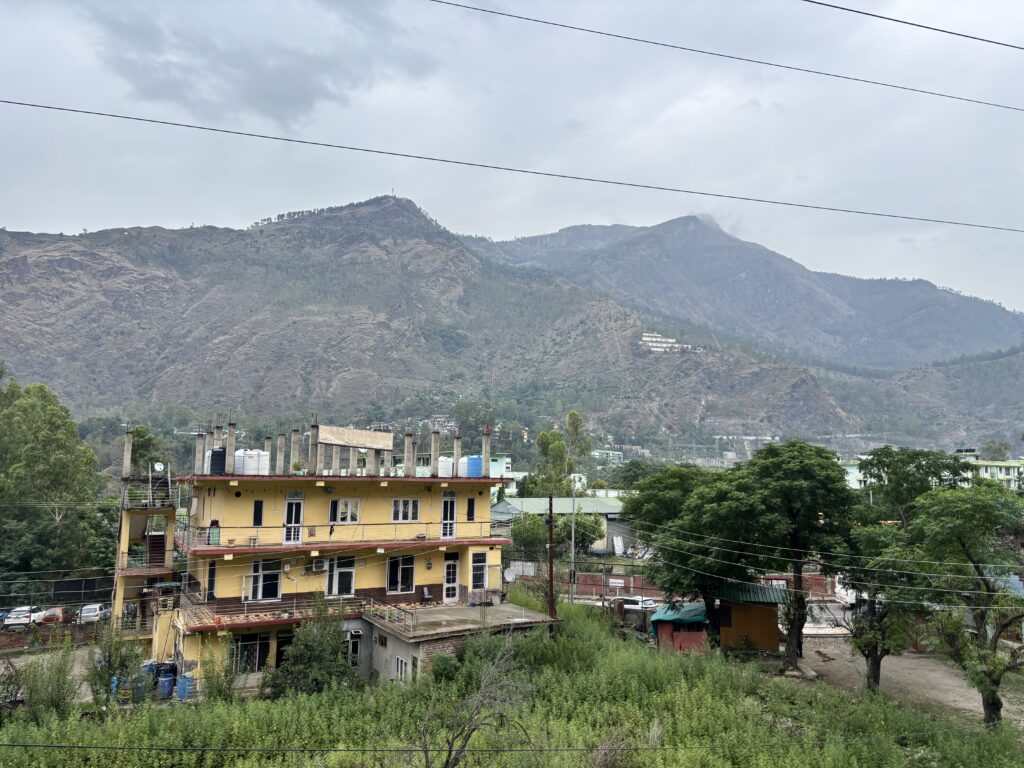
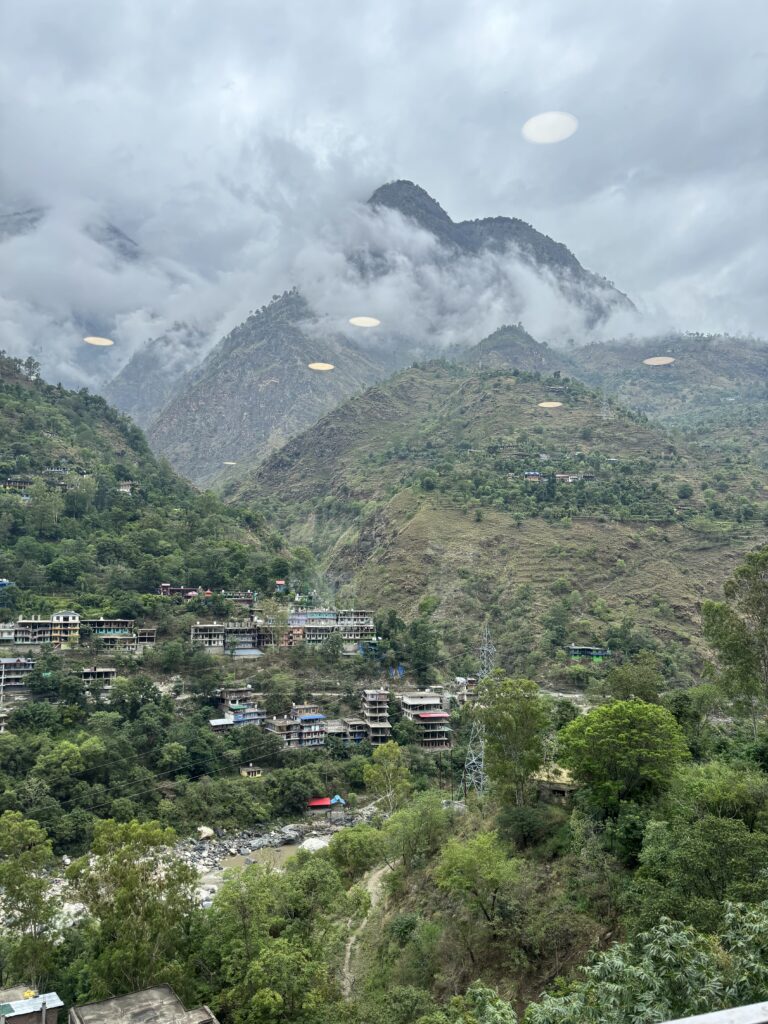
Rampur Bushahr is a small valley town on the outskirts of Shimla district, nestled along the banks of the Sutlej River. As evening descended upon the valley, the river flowed with remarkable force, creating a constant hum that blended beautifully with the silence of the mountains. From the window, we could see layers of bright green hills stretching into the distance, reminding us how quickly the chaos of city life fades in the Himalayas.
I have always believed that travel makes a person humble. The more you travel, the more you realize how small you are in comparison to nature and how similar people are despite living in different places. Over time, I have come to understand that beyond professions, wealth, and social status, what truly defines people is their willingness to help, support, and create a positive environment for others.
Shivam, who was travelling with us, seemed completely captivated by the beauty surrounding Rampur Bushahr. A colleague and close friend of Amar from their postgraduate days, Shivam was the youngest among us. Despite his age, he possessed a rare combination of sincerity, intelligence, and maturity. His curiosity, quick wit, and ability to connect with people would become an important part of the journey that lay ahead.
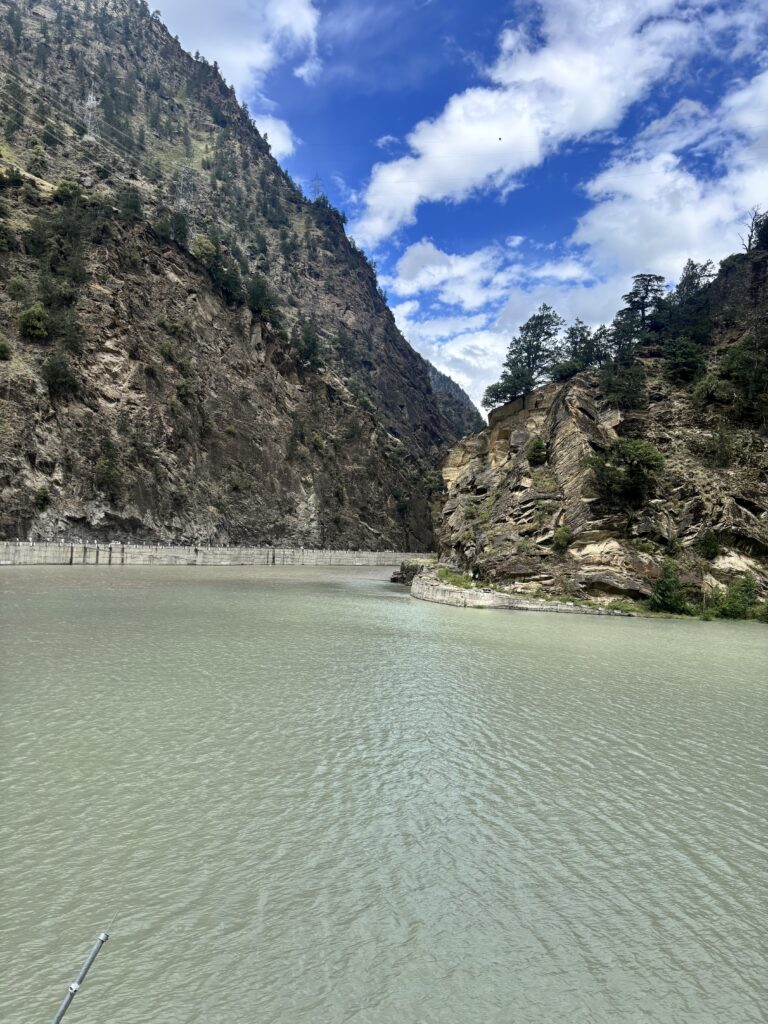
Rakcham Dam looked nothing like the massive concrete structures we usually associate with dams. Nestled amidst towering mountains, it felt more like a peaceful interruption in nature than an engineering project. The water flowed calmly before merging with the Sutlej and Baspa rivers, creating a landscape that seemed designed for silence rather than industry.
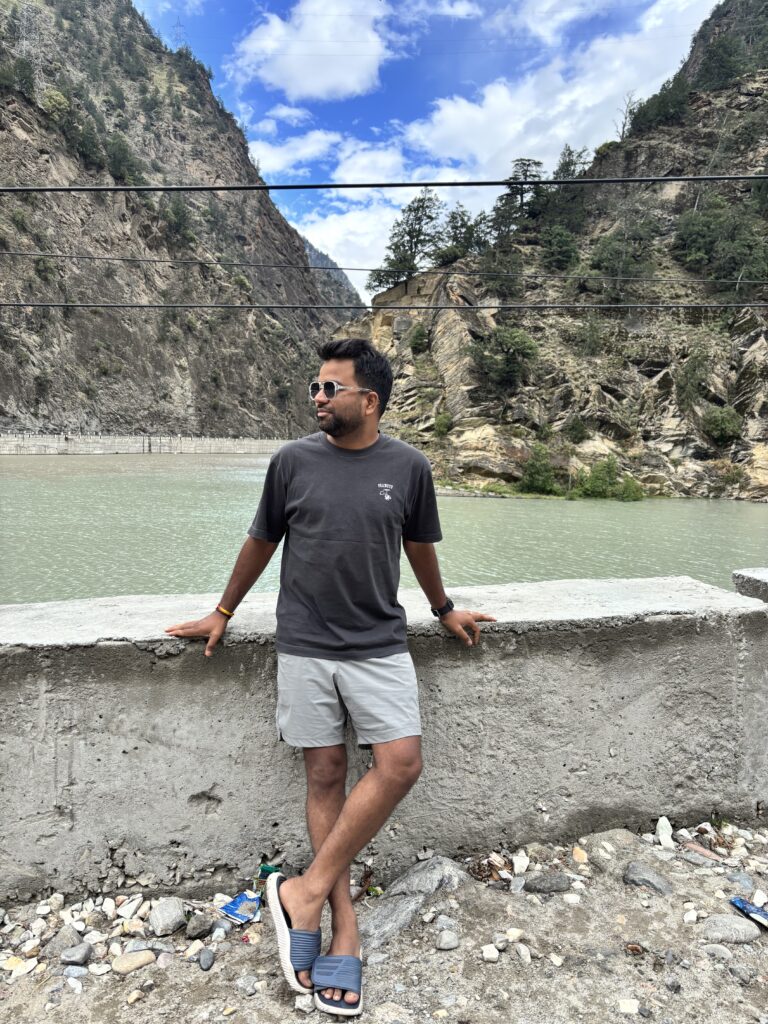
Before reaching Rakcham, we had stopped for breakfast at Gill Sweets & Bakers in Rampur Bushahr. The delicious samosas, mouthwatering parathas, and surprisingly authentic dhokla gave us enough energy to tackle the final stretch towards Chitkul.
Tyagi volunteered to take over the driving duties. Looking at Google Maps, the distance appeared deceptively simple — barely 40 kilometres remained. However, the estimated travel time stunned us. More than three hours for mere 40 kilometres.
The answer became obvious as soon as we entered the Baspa Valley.
The road twisted along the river, climbing higher with every turn. In several places, it narrowed so much that two vehicles could barely cross each other. One driver would often have to reverse or carefully manoeuvre to create space for the other. Every bend revealed a new view, and every kilometre demanded complete concentration.
The adventure was real, and so was the adrenaline.
By afternoon, we finally reached our base for the night — Baspa River Village and Cottages.
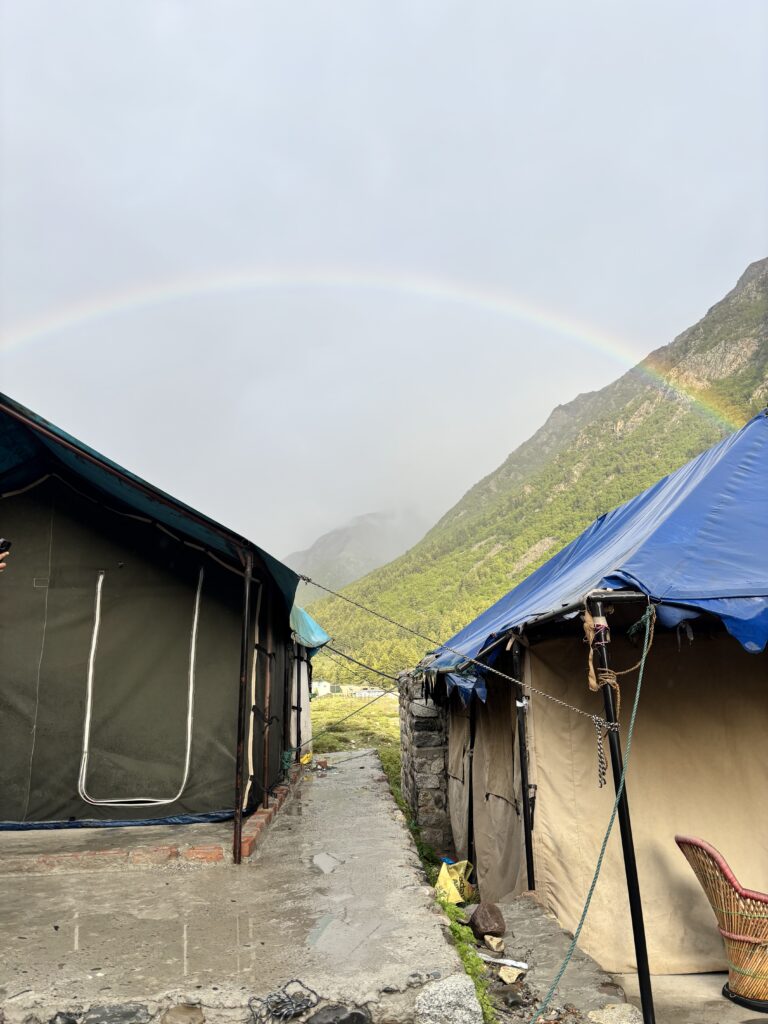
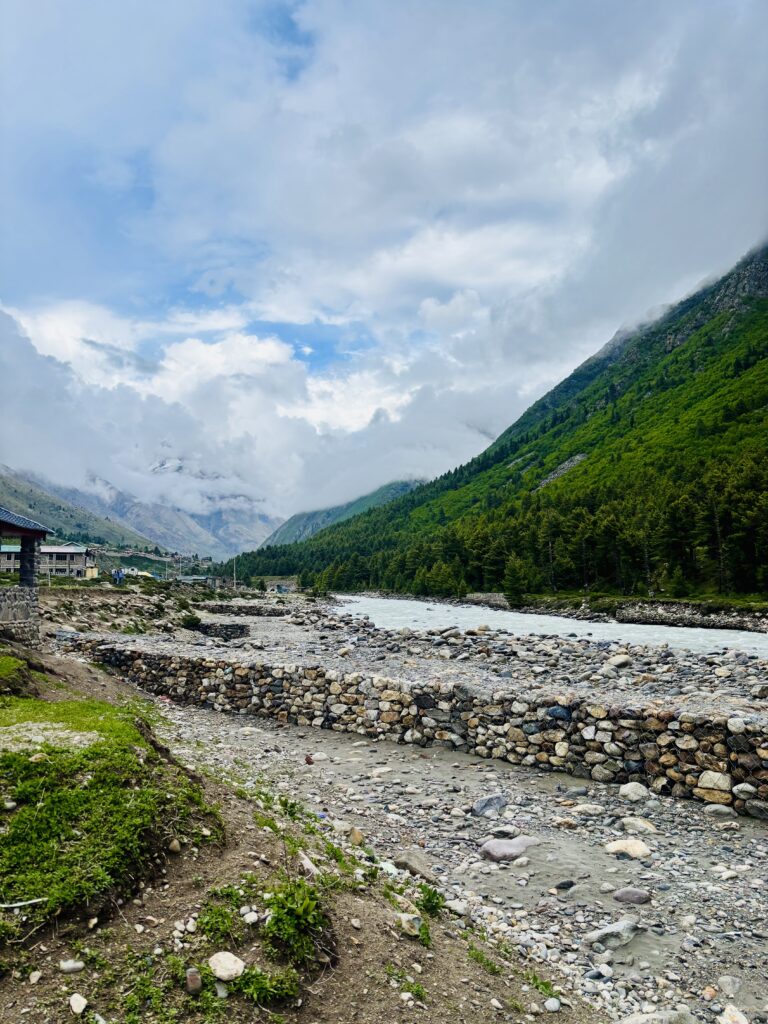
The tents looked charming from the outside, perfectly placed against the backdrop of snow-capped peaks and the flowing Baspa River. However, Chitkul has a way of quickly reminding visitors that beauty comes at a price. As temperatures dropped well below freezing after sunset, the tents suddenly seemed far less capable of protecting us from the mountain cold.
Fortunately, we had Tyagi.
If there was one person capable of keeping an entire group entertained for hours, it was him. A gold medallist during his MD and now a practising psychiatrist, Tyagi combined intelligence with a remarkable sense of humour. I knew him through Amar, as they had studied together since their MBBS days before pursuing different specialisations.
This was our third trip together after Lahaul-Spiti and Kasol-Manali, and by now we had learned that every journey with Tyagi guaranteed two things — endless stories and uncontrollable laughter.
Dinner at the campsite was ordinary and forgettable. The food filled our stomachs but left little for the memory.
The evening truly began when we gathered around the bonfire.
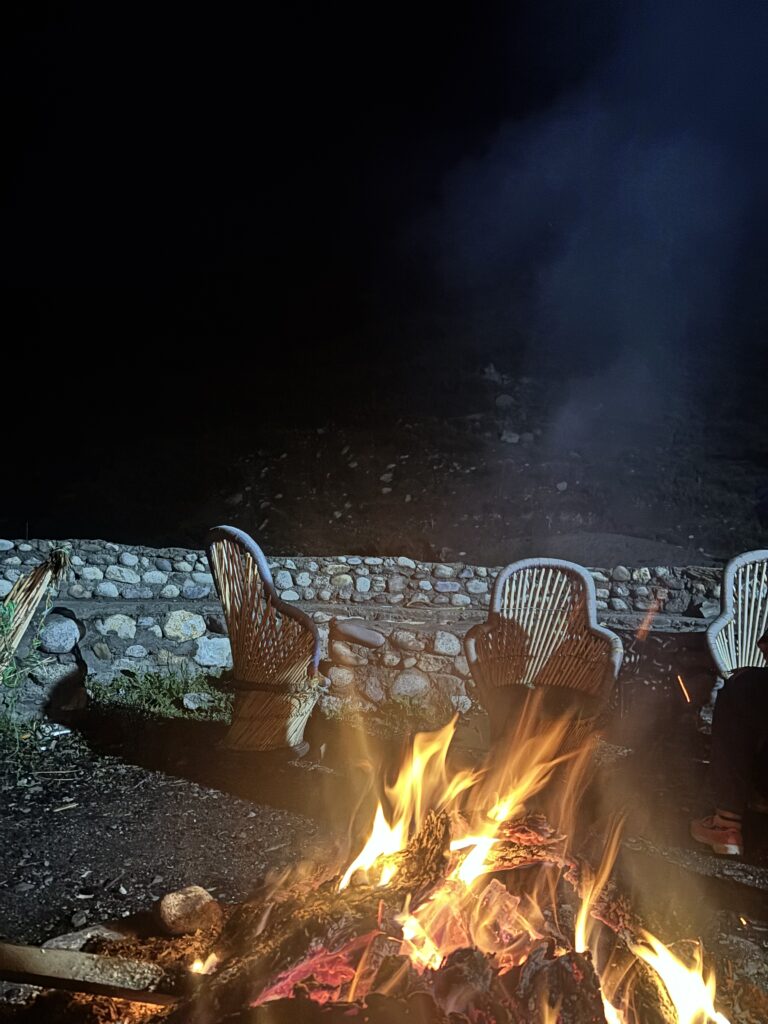
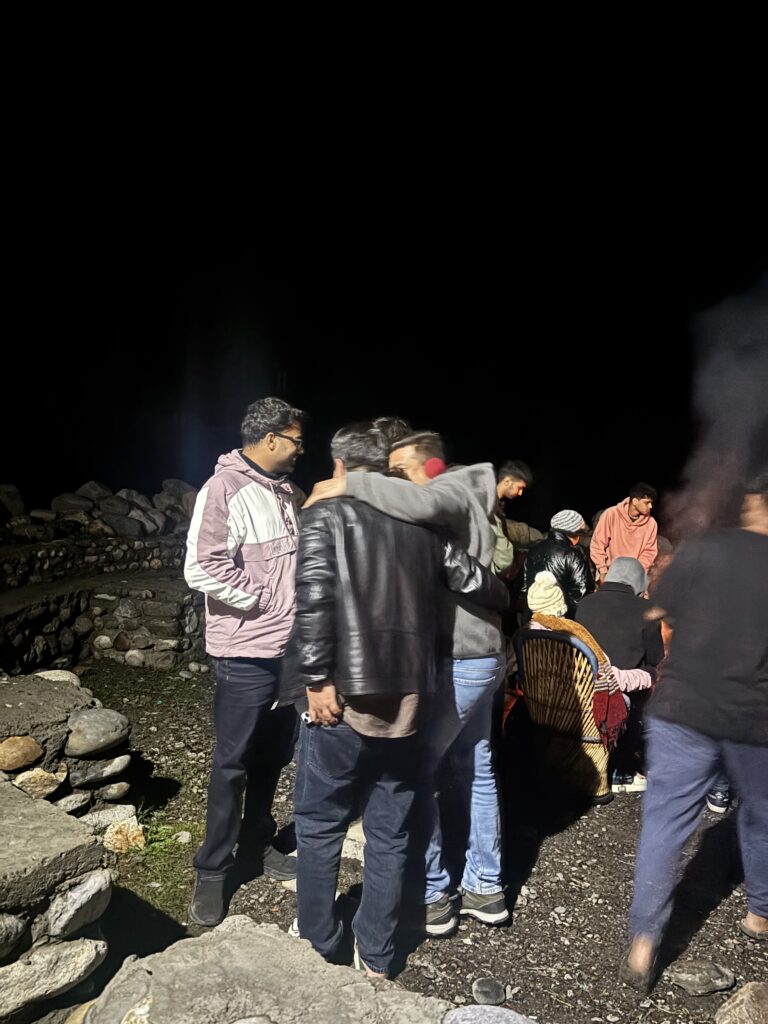
People from different corners of India sat together under a sky overflowing with stars. The warmth of the fire fought against the mountain chill, while the sound of the Baspa River created a natural soundtrack in the background. Above us, the moonlight illuminated the surrounding peaks, making them glow softly in the darkness.
For a few moments, nobody seemed interested in their phones, deadlines, or responsibilities.
The mountains had everyone’s attention.
After spending some time by the fire, we returned to our tents with a bottle of spirit, a collection of terrible jokes, and enough stories to last until midnight. Between Tyagi’s storytelling, Amar’s observations, and Shivam’s occasional contributions, laughter became the dominant language of the evening.
Eventually, we called it a day, determined to wake up early and witness the morning Chitkul had to offer.
The next morning, the energetic sound of the Baspa River welcomed us once again.
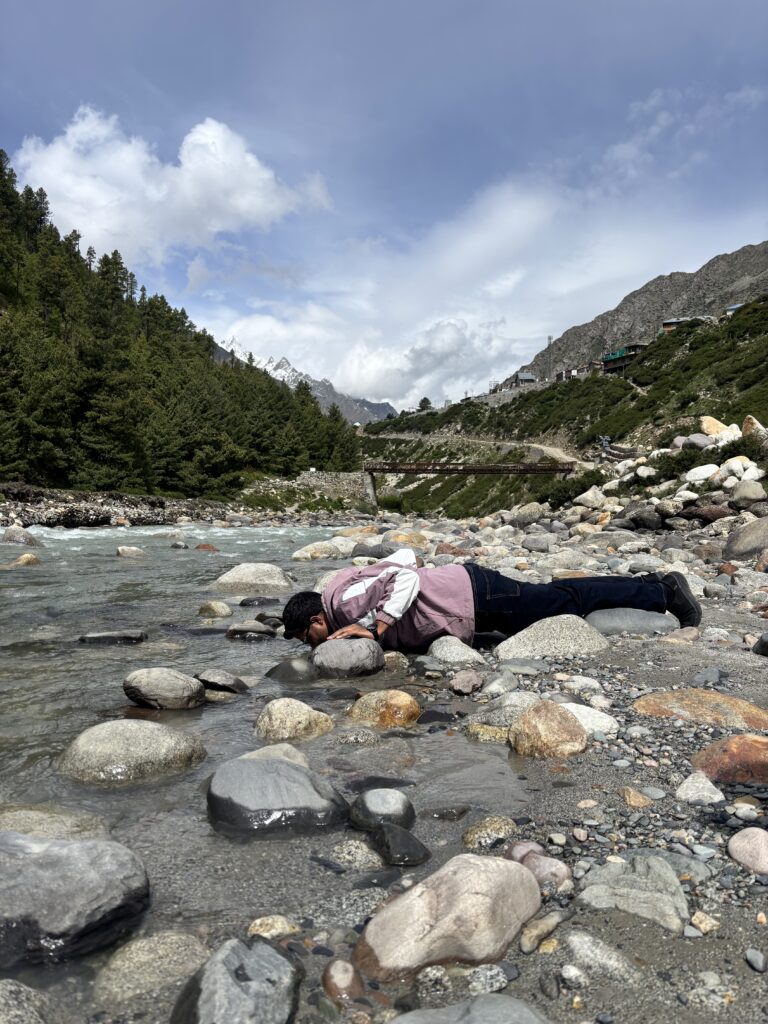
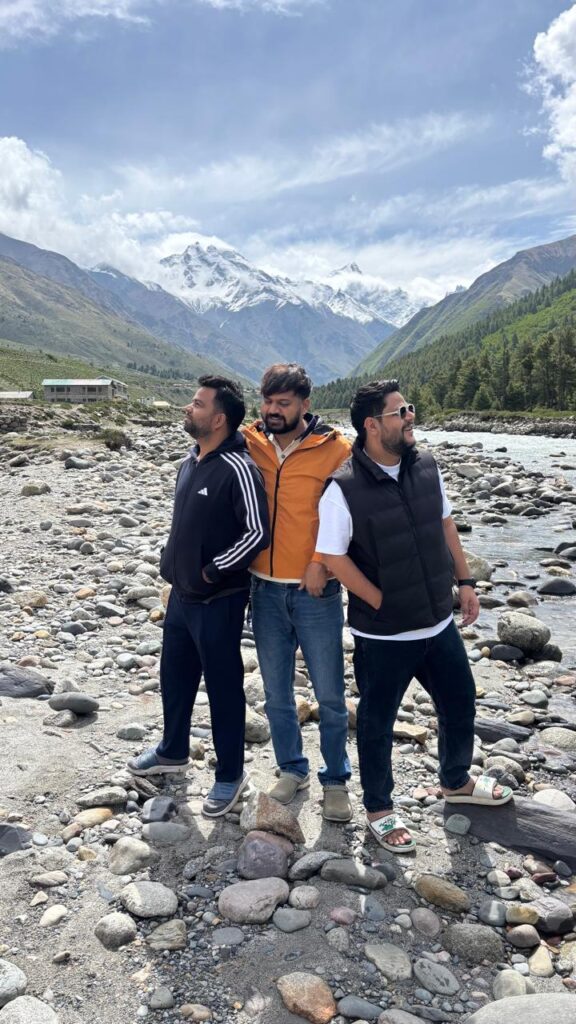
The valley looked completely different in daylight. Snow-covered peaks stood proudly against a bright blue sky, while the river rushed through the valley with a force that felt both calming and powerful.
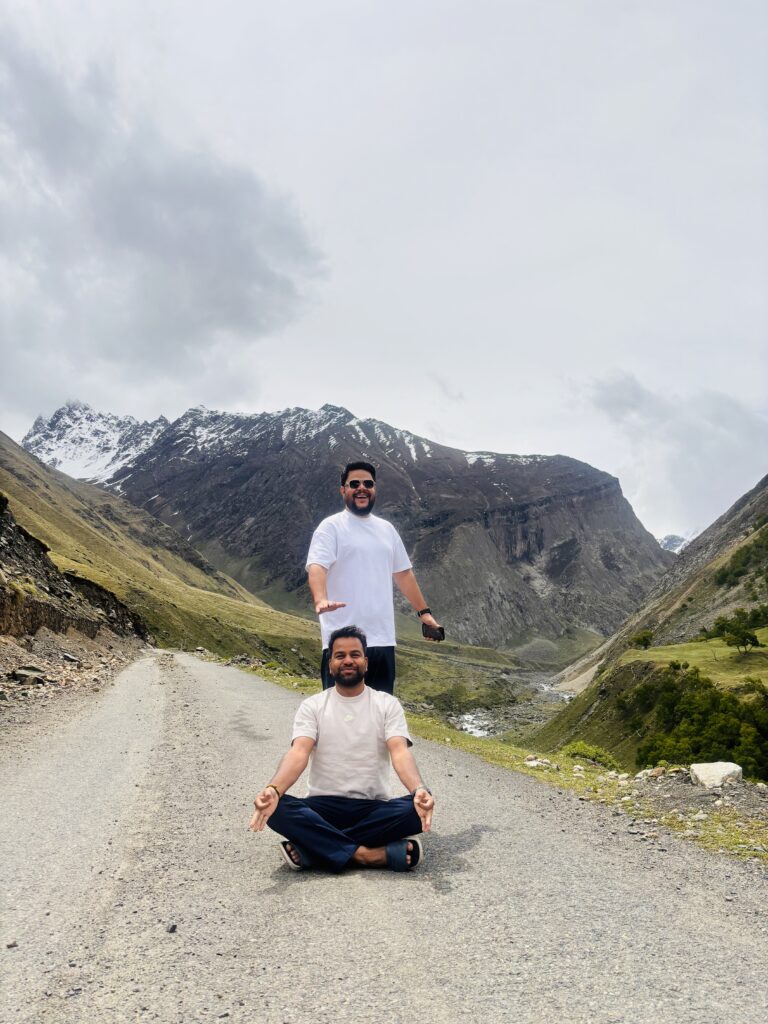
After a short walk along the riverbank and a few mandatory photographs, we drove towards the Indo-Tibetan border, located just a few kilometres beyond the village. The scenery somehow became even more dramatic as we moved further into the valley.
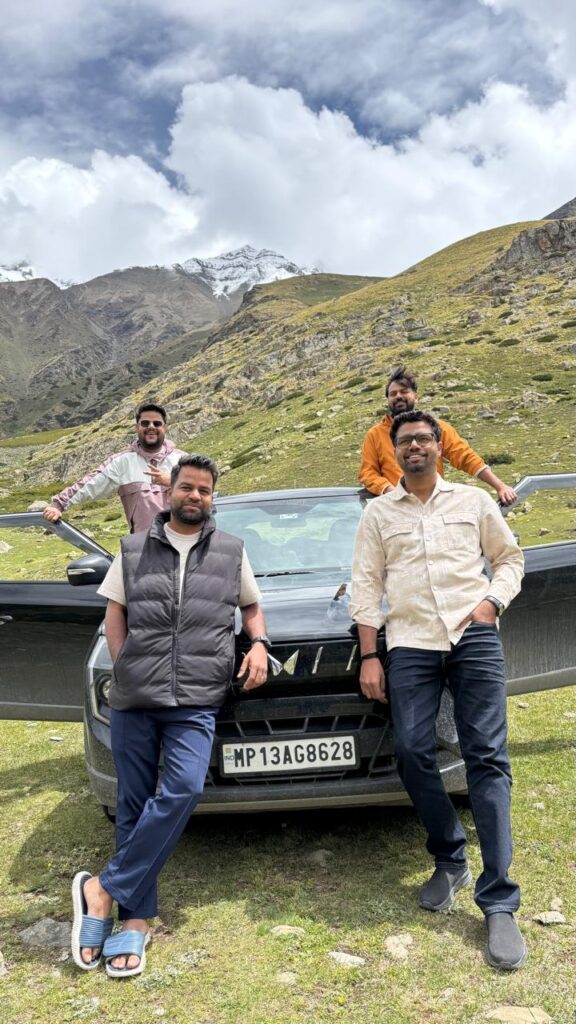
By now, breakfast had become our highest priority.
Returning to Chitkul village, we stumbled upon a tiny café serving Siddhu and coffee. The menu could practically be counted on one hand, but the Siddhu turned out to be one of the best I have ever eaten. Sometimes the smallest places leave the biggest impression.
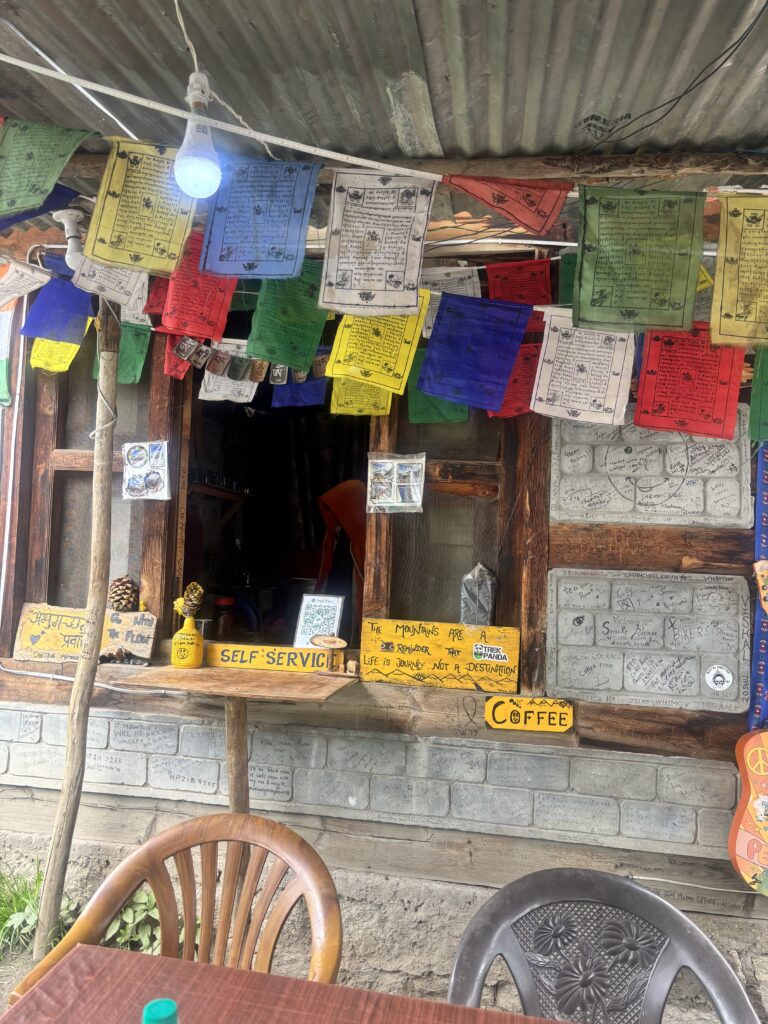
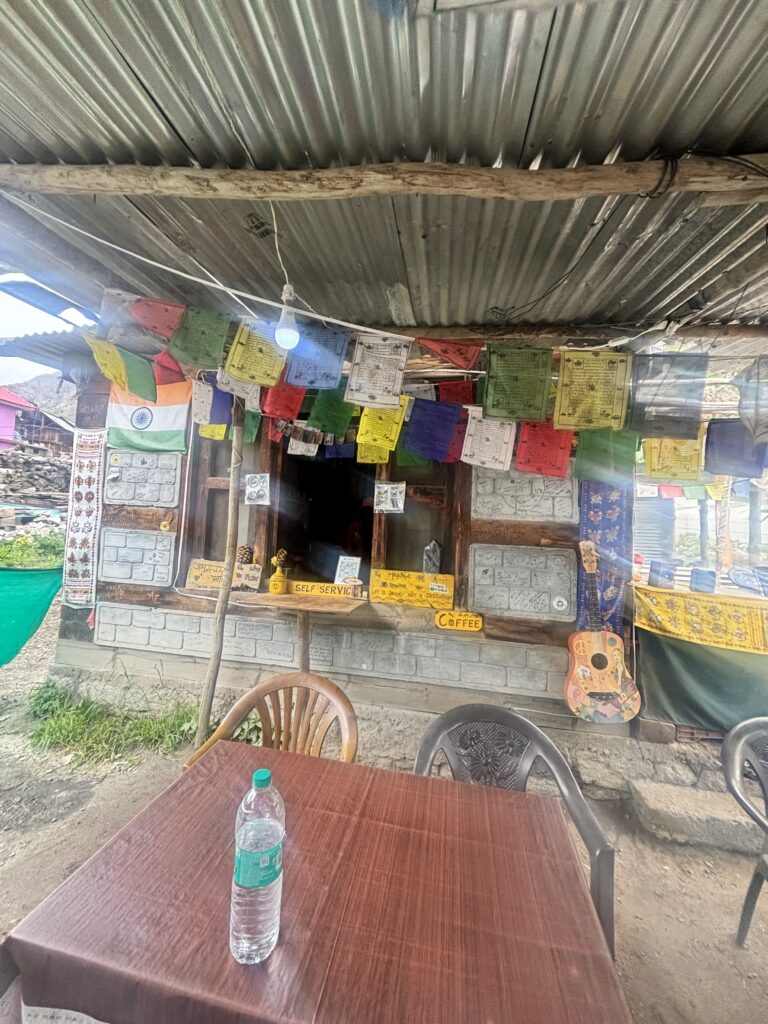
What surprised us most was not the food or the scenery.
It was time itself.
By what felt like late afternoon, we checked our watches and discovered it was barely midday.
Without mobile networks, constant notifications, and endless distractions, time moved differently in Chitkul. The hours felt longer, conversations lasted longer, and silence became comfortable again.
At one point, we looked at the clock and realised it was only 3 PM.
Perhaps time really moved slower in Chitkul.
Or perhaps city life had taught us to move too fast.
Back in our cities, our lives could not have been more different. Amar and Shivam worked in the same hospital, spending long hours attending to patients and carrying responsibilities that rarely paused. Tyagi navigated the complexities of the human mind as a psychiatrist, while I continued chasing my own goals, travelling between cities, countries, and commitments.
Yet in Chitkul, none of those identities seemed to matter.
For a brief moment, nobody was a doctor, a businessman, or a professional carrying the weight of expectations. We were simply four friends sharing stories beside a river, laughing at old memories, creating new ones, and appreciating the luxury of having nowhere important to be.
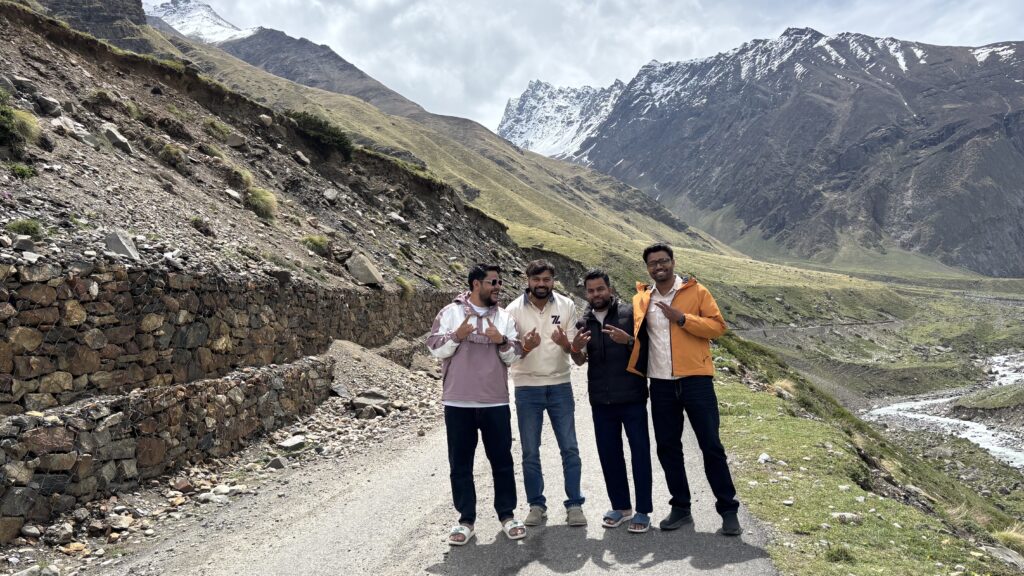
Perhaps that is what makes the mountains special.
They do not change who we are.
They simply remind us who we were before life became so complicated.
Some journeys end at the destination. Others begin there. The road back from Chitkul is a story for another day.
You didn’t just record a trip🌄you captured memories. The mountain views and the vibe of friendship made this blog truly special. 👏🏔️🌠
Thank You Sonee! Your comments on this made the day.
Ek number feels like I am there again
Thanks Bro! We have more trips to come.
What an amazing trip that was, sir. I got to experience it through your blog.
Thank You Koshik! More trips & more stories are yet to come.